

A Grammar Built with Rocks
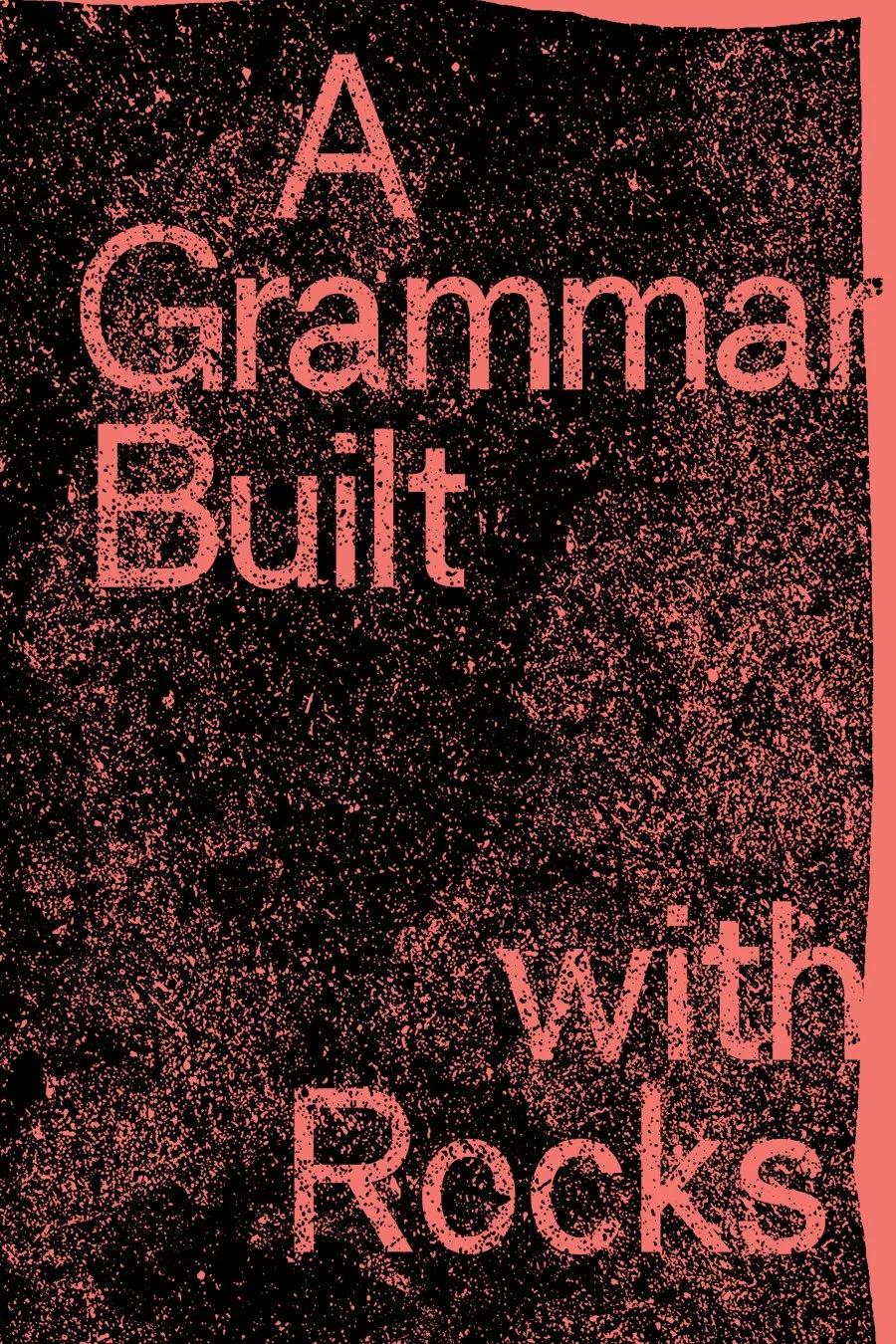
A Grammar Built with Rocks / Black Bach Artsakh
Thursday, January 29
Doors: 6:30pm
Event: 7pm
at 2220 Arts + Archives
∆
The Poetic Research Bureau and Wendy’s Subway present a book launch for A Grammar Built with Rocks, edited by Shoghig Halajian and Suzy Halajian. The evening will include readings, a film screening of Ayreen Anastas and Rene Gabri’s Black Bach Artsakh, and a discussion with filmmaker Gabri and writer and artist Mashinka Firunts Hakopian.
∆
Featuring writing and artistic practices that trace the racialized and gendered relationships between bodies and land, A Grammar Built with Rocks explores artists’ engagements with sites of physical dispossession and socio-ecological crisis. The publication highlights how creative research methodologies can function as radically new place-making practices. Bringing together a range of feminist-decolonial texts and visual contributions, the book examines how movement, transience, and improvisation offer alternative ways of being-together while being-in-place.
∆
Screening
Ayreen Anastas and Rene Gabri, Black Bach Artsakh (2021, 150 minutes)
Black Bach Artsakh is the name of a world. It lives in and as a film. Those who view it not only inhabit it, but also care for it, keep it alive by keeping watch over it. In this way, it is not a film which so much resists the makers of war and those who deny and continue to justify genocide: it is a film which outlives them.
If film is a document, then it bears witness to a place and a time. For example: This film re-members events from a place called Artsakh in the year 2007—a middle point—exactly 13 years after the 1994 cessation of hostilities in the struggle for liberation and self-determination by Nagorno-Karabakh’s Armenian inhabitants, and 13 years before the 2020 invasion by Azerbaijan’s autocrat, who enlisted Turkey’s military, several thousand mercenaries from Syria and arms from Israel to conquer those same lands as his country’s sovereign domain.
Then film as a testament, which this film claims affinity with, is what unsettles the domain or reign of any sovereign or sovereignty. It inhabits a time, which is neither the linear one of history nor the make-believe one of fiction: but what some refer to as that of the eternal. For this, and rightly so, Johann Sebastian Bach has been assigned as its honorary composer.
∆
Ayreen Anastas, a body in search of gestures, words, phrases, sentences to disactivate and destitute the impositions, forms, including the form of biography this form of self, to bring about some forces which give potency to life to bodies with and around them. How to not separate one ‘self?’ from a common that helps shape life and gives it intensity and meaning. How to become unintelligible, incomprehensible, opaque to the fabricated machines of subjectivation and self-making. How to write in a language that only friends-to-come receive, a language that wrestles with language to keep the relations to all the palestines and to their forms of life alive.
Rene Gabri is another name for that process of recovering stolen life. The name is not gendered, though it has engendered enough confusion to assign to it all sorts of pronouns and prescriptions. It is a non-native name calling forth a native life, a life constantly pushed to the margins of oblivion. It recalls sites of previous and ongoing battles. It remains steadfastly associated with the wind, which is the closest kin or resembling a homeland. In this searching, a question which re-emerges: is wind origin, destiny or the unforeseen push toward a dissemination of the seeds of whatever could become recovery.
Mashinka Firunts Hakopian is a writer, artist, and an Associate Professor at ArtCenter College of Design. She is a Fellow at the Vera List Center for Art and Politics at the New School, and a 2024-25 Visiting Research Fellow at Cambridge Visual Culture. She is the author of The Institute for Other Intelligences (X Artists’ Books, 2022). Her performances and projects have been presented at REDCAT, Music Center LA, the 2024 Asian Art Biennial, and Centre Pompidou. Her writing has appeared in Feminist Media Histories, Los Angeles Review of Books, AI & Society, and elsewhere.